1. A house that was no longer being used
Cal Cente had always been a family home in the mountains.
But as Santi’s daughters grew older and their lives became busier with their own plans and sporting commitments, weekends in Cerdanya became less frequent. A house that had once been part of the family’s routine was spending more and more time empty.
For Santi, the numbers no longer seemed to make sense.
He works in real estate himself, so the natural solution appeared straightforward: put the property on the market and sell it.
“At that point, keeping a house we were barely using didn’t seem to make much sense.”
2. Testing a different way
Before selling, we proposed trying something different for six months.
The idea wasn’t simply to list the house online. Cal Cente needed to become a property genuinely prepared for short-term guests.
That meant obtaining the tourism licence, reorganising and preparing the spaces, improving the presentation, providing the right linens and towels and building the operation behind it — from cleaning and laundry to guest experience and day-to-day management.
Santi wasn’t completely convinced at first.
But instead of making a permanent decision, he agreed to test the model.
“I wasn’t sure vacation rentals were the right option for the house, but trying it for six months felt worth it.”
3. When the results changed the decision
The test worked.
Bookings started coming in, guests responded positively and the property generated the income Santi had originally expected from a seasonal rental — and then went beyond it.
But the biggest result wasn’t simply the revenue.
After those first months, Santi made a decision that had seemed unlikely only a short time earlier:
The house was no longer for sale.
What began as a six-month experiment continued year after year. And years later, Cal Cente remains a vacation rental that generates income while still being available for the family to enjoy.
“The results made the decision easy. There was no longer a reason to sell.”
4. What this experience teaches us
A property doesn’t always need to be sold simply because you’re no longer using it as much as before.
Sometimes it needs a different strategy, the right positioning and an operation designed around the way you want to live.
For Santi, that meant transforming an underused second home into an asset he could keep, enjoy and generate income from without having to manage the daily work himself.
And perhaps the clearest sign that the model worked is what happened next:
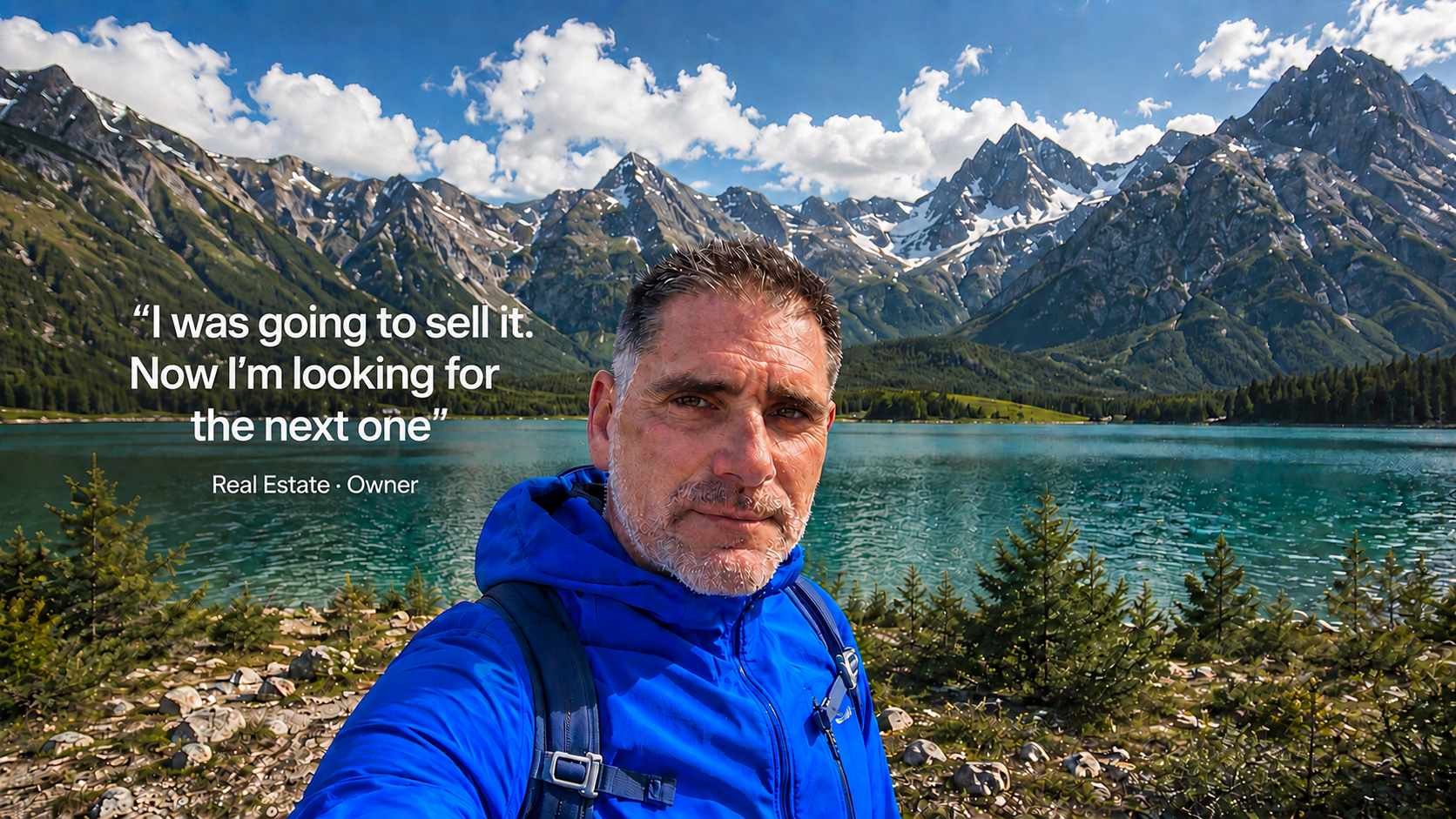
He started looking at other properties as potential vacation-rental investments.
Sometimes changing how a property works can completely change what it’s worth keeping it for.